Living alone can mean freedom, familiar routines and a home that feels entirely your own. It can also leave a small question in the background: if something changes, who will notice? For relatives living further away, the same concern often sits between phone calls. Technology can offer another layer of reassurance, provided it fits the person’s life and respects their choices.
There are several approaches, each with a different job. Before choosing one, talk about what you actually want: a way to ask for help, an alert after a possible fall, or a little more information between conversations. The person living alone should be part of that decision from the beginning.
Personal alarm pendants
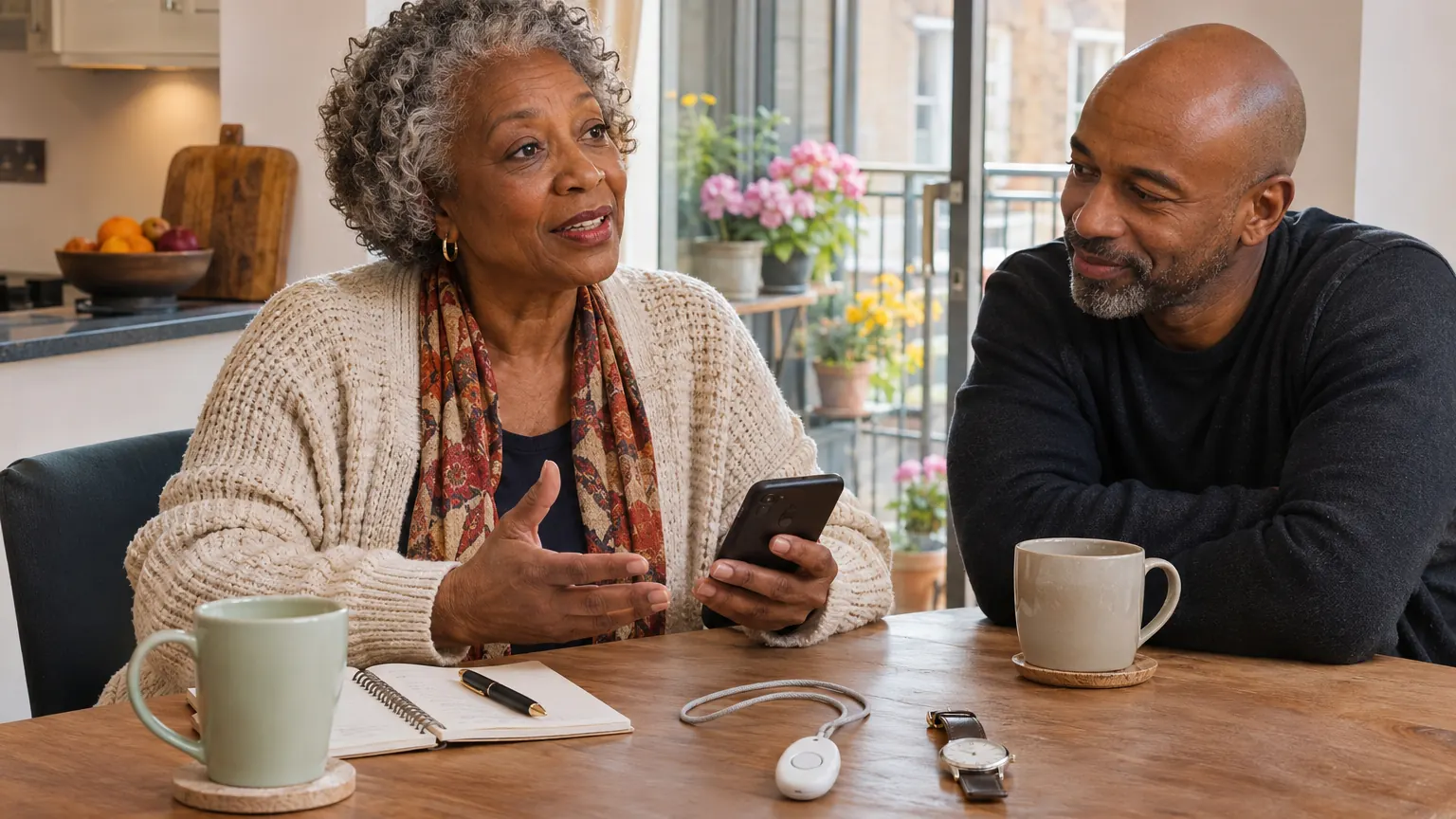
A personal alarm pendant offers a direct way to request help. Many models use a button worn around the neck or wrist, connected to either chosen contacts or a monitoring service. A monitored alarm can be valuable when professional follow-up is important. Check where it works, whether it includes fall detection and what happens when the button is pressed.
Fall-detection wearables
Fall-detection watches and other wearables can raise an alert when they recognise a possible fall. Some also provide a manual help button. They need to be worn and maintained according to the device instructions, and fall detection cannot be assumed to identify every fall. Ask who receives an alert and how the device connects when the wearer is away from home.
Indoor cameras
Indoor cameras provide a view of the rooms they cover, and some offer motion alerts and two-way conversation. That can be useful, but it also means deciding when it is acceptable for someone to see or hear inside the home. Agree on placement, access and privacy controls rather than treating a camera as an automatic choice.
Home sensor systems
Home sensor systems offer another route. Movement and door sensors can build a picture of household activity without recording video. They can help families notice changes in routine, including when someone has not been up and about. They require equipment around the home, but do not depend on the person carrying a smartphone from room to room.
Smartphone check-in apps
Check-in apps use the smartphone someone already has. Some ask for a daily tap and notify a contact if it is missed. Gabriel combines signs of phone activity with simple check-ins. After a quiet spell during monitoring hours, it can ask whether the person is okay. A request for help or an unanswered check-in can alert their chosen people.
For someone who picks up or carries their phone every few hours, Gabriel offers reassurance without an extra wearable, cameras or location tracking. The person chooses who receives their updates and how much activity detail to share. It also distinguishes unavailable phone information from inactivity. A phone left on a table is not proof that its owner needs help.
Agree who will follow up
Whichever approach you choose, agree who will follow up and keep ordinary calls and visits part of the picture. Gabriel does not detect falls or contact emergency services; updates and alerts depend on phone permissions and connectivity. Different tools can work alongside one another when they serve different needs.
Gabriel is currently in testing. If a little reassurance between calls sounds right for you or someone you love, join the waitlist to hear when the app becomes available.
A little reassurance between calls
Discover activity updates and simple check-ins, using the smartphone you already carry.
Explore how Gabriel works Join the waitlist