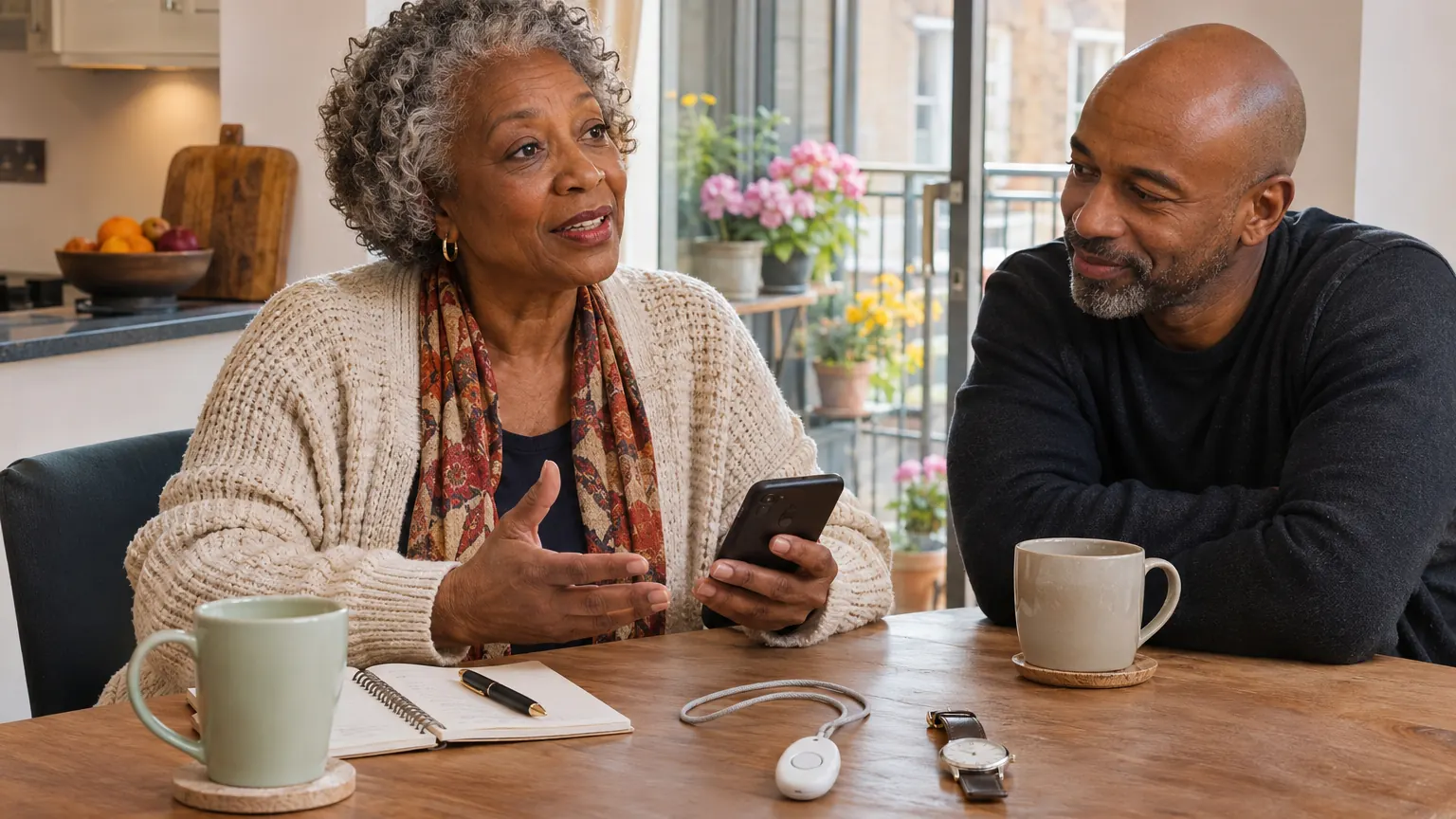
Distance can make the gaps between conversations feel bigger. You may be several hours away from an older parent, balancing work and your own family, while wondering whether you should call again.
Being there does not have to mean knowing everything. A few agreed routines can make support clearer for everyone, while leaving plenty of room for an independent life.
Start with a rhythm that suits you both
Ask when your parent enjoys talking and which kind of contact they prefer. A regular call can be something to look forward to; it need not become a daily test that they must pass.
Talk about what a missed call means. They may be out, talking to someone else or simply have left their phone in another room. Agree how you will follow up rather than deciding in a worried moment.
Bring nearby people into the plan
If your parent wants to, identify a neighbour, friend or relative who might be willing to help when you cannot visit. Ask that person directly what they are comfortable doing and when they are usually available.
A list of names is not the same as an agreed support network. Keep contact details current, make sure people know each other’s role, and avoid assuming that someone is always on call.
Make the next step clear
Decide together what to do if a check-in is missed: perhaps call the person, try another agreed contact method, then ask a nominated nearby person to follow up. If there is an urgent concern, contact the appropriate emergency services directly.
Keep the plan simple enough to remember. Review it when someone travels or the usual contact is unavailable.
Add information between conversations
Some families prefer a short message. Others choose a personal alarm, home sensors or a smartphone check-in app. The useful question is what gap you are trying to fill, and whether your parent is comfortable with the solution.
Gabriel uses signs of phone activity to provide updates to chosen people. It can ask for a response after a quiet spell during monitoring hours, and alert contacts if help is requested or a check-in remains unanswered. A connected loved one can also send a check-in.
The app treats unavailable phone information separately from inactivity. It does not track location or tell you for certain that someone is safe. A phone left on a table may give little information about the person carrying on with their day.
Share the responsibility
When more than one family member is involved, agree who will follow up so nobody assumes someone else has done it. The person sharing activity should remain part of the decision about who sees what.
Gabriel allows more than one trusted connection, with activity detail chosen for each person. That can help involve your own people without turning family life into constant observation.
Above all, keep making space for conversations that are about life, not logistics. Reassurance should support the relationship you already have.
A little reassurance between calls
Discover activity updates and simple check-ins, using the smartphone you already carry.
Explore how Gabriel works Join the waitlist