Connect with someone you trust.
Set up Gabriel together. The person sharing their activity chooses who can look out for them.
Gabriel helps you look out for someone you love through everyday phone activity and simple check-ins. No location tracking. No extra equipment.


You don’t need to know every detail of their day. Sometimes, you just want a little reassurance between conversations.
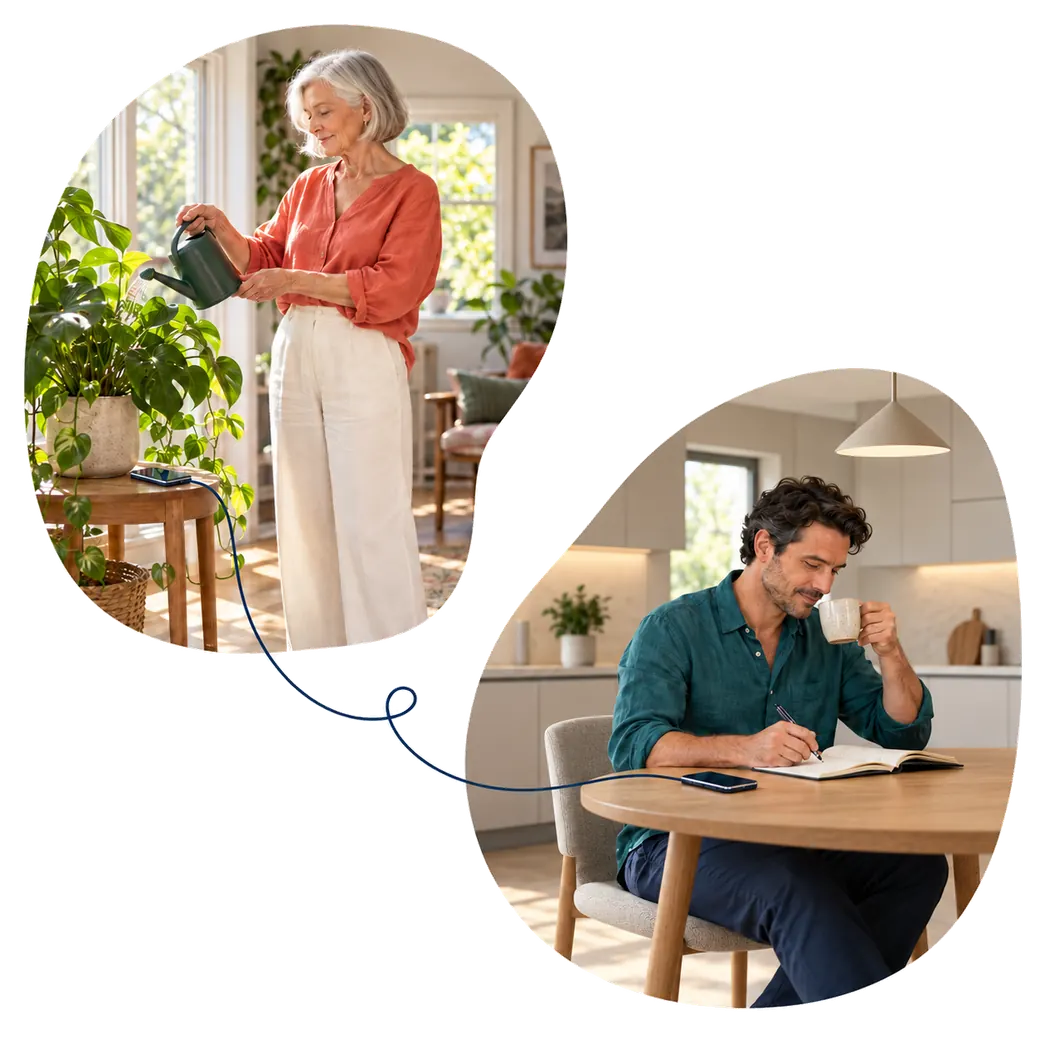
For a parent living independently. For a son or daughter living further away. For friends who look out for each other.
Gabriel brings both sides together: a little reassurance for loved ones, and choice and privacy for the person sharing their activity.
See how it works →Set up Gabriel together. The person sharing their activity chooses who can look out for them.
Movement of their phone provides signs of activity, shared with their chosen people.
Gabriel can ask if they’re okay. If they request help or don’t respond, a trusted contact is notified.
Gabriel uses the smartphone they already use. Everyday phone movement provides signals that help loved ones stay informed, wherever their own day takes them.
No specialist equipment to install. No location tracking.

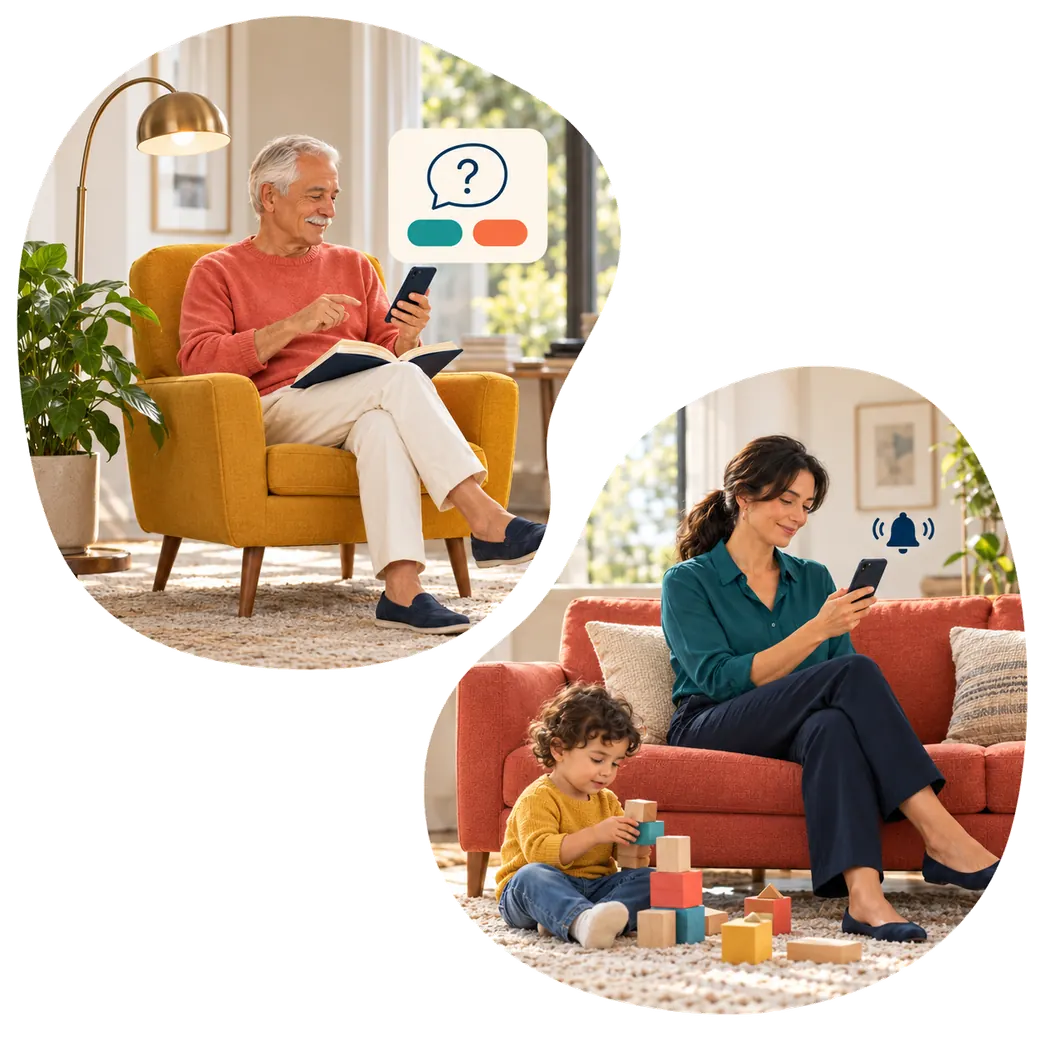
A quiet phone doesn’t always mean something is wrong. When a check-in is needed, Gabriel asks the person to respond.
They can say they’re fine or ask for help. If a check-in goes unanswered, a trusted contact is notified so they can follow up.
Gabriel provides activity information and check-ins. It does not confirm someone is safe or replace emergency services.
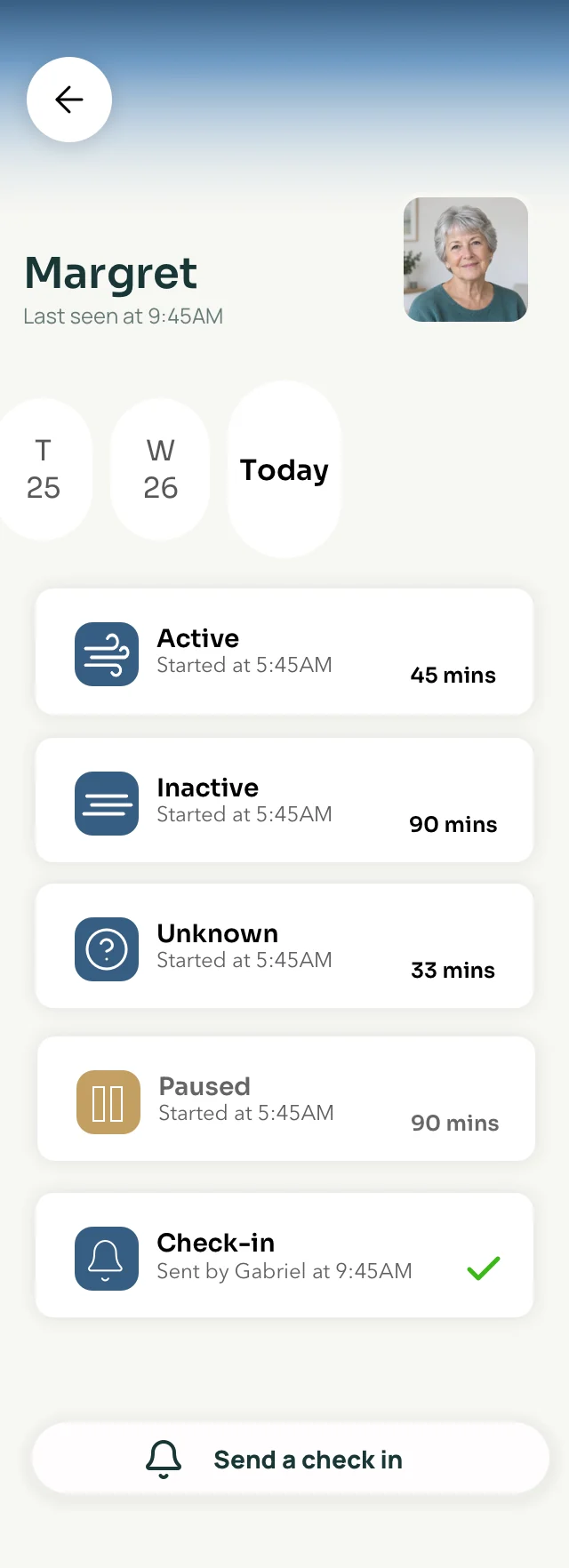
See activity updates and check-ins together, in one simple view.
Gabriel distinguishes signs of activity from times when information is unavailable. A phone that isn’t reporting is not the same as a person being inactive.
You can also send a check-in when you want to hear from them.
App preview. The interface may evolve during testing.
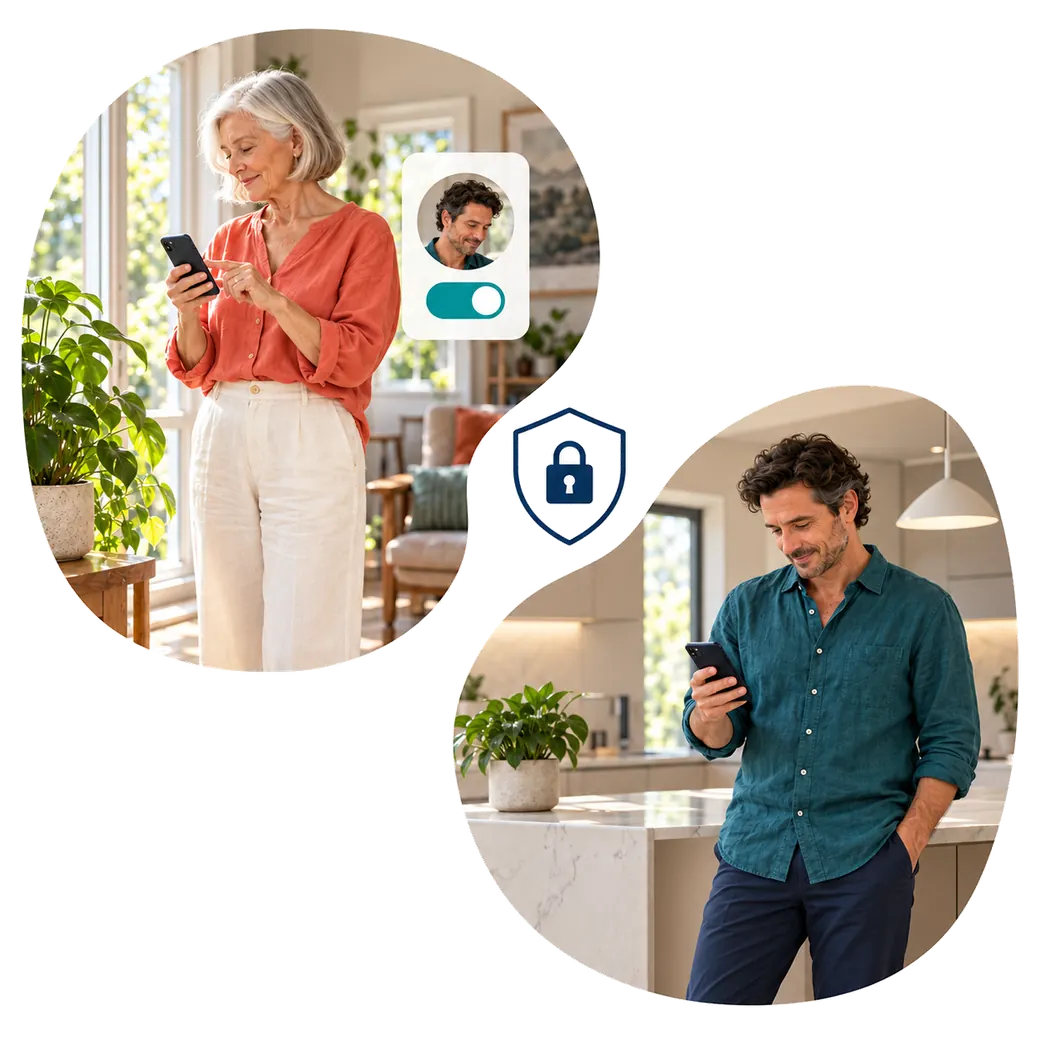
The person sharing activity decides who receives their updates and can stop sharing at any time.
A daughter, a brother, a friend next door. A care circle brings trusted people together around one person living independently.
Everyone in the circle receives the same activity updates and check-ins, so keeping an eye on someone you love doesn’t have to fall to just one person.
The person sharing their activity stays in control. They choose who joins their circle and can remove a connection at any time.
One person at the centre. Their people around them.
 The person
 Daughter
 Son
 Friend
 Neighbour
Illustrative scenarios with fictional people and AI-generated portraits, not customer testimonials.
Paul
“Since Dad passed away, Mum’s been living on her own. We talk every day, but if she misses a call, I still catch myself worrying. With Gabriel, I could see signs of activity from her phone between our conversations, without ringing again just to check. I’d still call as often—there’s always something to catch up on.”

Catherine
“My brother’s had some difficult years with his mental health, but he’s doing well and getting on with his life. I want to be there for him without another “How are you today?” message landing every few hours. What appeals to me about Gabriel is that he would choose what connection to make, and I wouldn’t be tracking where he goes. We’d agree on it together, on his terms.”
Jaspal
“I’m 75 and still give my nephew Jonathan a run for his money on our walks. After a scare last year, though, I liked the idea of someone looking out for me between visits. I’d be the one inviting him to connect on Gabriel, using the phone I already carry. A little backup suits me nicely; I’ve no intention of handing over the reins.”
Mae-Ling
“Maureen and I have lived on the same street for years, and our weekly coffee is practically sacred. We both live alone now, so we like the idea of connecting in both directions—me looking out for her, and her looking out for me. Neither of us would have to be the person who always remembers to send a morning message. And there’d still be plenty left to discuss over coffee.”

Daniel
“Dad can spend an entire afternoon reading, so a quiet phone wouldn’t surprise me. The useful part for me is that Gabriel can ask him to check in when needed. If he asked for help or didn’t respond, I’d get a notification and could follow up. I’d also want to know when information was unavailable, rather than mistake an offline phone for a quiet afternoon.”
Scroll or swipe to explore all five stories.
Gabriel is for people living independently who regularly use a smartphone, and the family members or friends they choose to share activity updates with.
Yes. Both the person sharing activity and the person looking out for them use Gabriel on their phones and accept the connection.
No. Gabriel uses signs of phone activity to provide updates, without sharing where someone is or where they have been.
A still phone does not necessarily mean someone is inactive or needs help. Gabriel uses available activity information and check-ins to help clarify uncertainty. It works best for people who regularly use or carry their phone.
When recent information is unavailable, Gabriel distinguishes that from inactivity. A working connection and the required phone permissions are needed for updates.
The trial begins when the person sharing activity and at least one trusted contact have accepted their connection—not when the app is downloaded.
Gabriel is currently in testing. Join the waitlist with your email address to hear when it becomes available for iPhone and Android.
A simple way to stay connected, with privacy at its heart.
Join the waitlist · 14-day trial when your connection becomes active